
By Monica Davidson
Creative practitioners can quickly fall into the weeds of the work. We spend so much time creating the things, getting the things to our clients, selling the things, managing the things. Do we ever take the time to measure our success? And more importantly, should we?
Success for us is so much more than dollars in the bank (although that is lovely). For us, creating beauty, connecting our community, telling stories and shaping culture are just as important, sometimes more. Measuring that – and even better, reporting to others on that – is a powerful way of proving our value and leveraging that benefit to create further opportunities.
Enter impact measurement. While it might sound like corporate jargon, impact measurement is simply the process of understanding and communicating the positive, long-term change our creative work brings to our customer, clients and community. It’s a wonderful, if time-consuming, way of creating all the good vibes, but it’s also a vital tool for marketing, growth, sustainability, and securing your next big batch of funding.
Why Impact Measurement Matters
At its core, measuring your impact helps you understand if you’re actually doing what you set out to do. It puts your vision and purpose to the test in real and practical ways.
- Are your artistic workshops genuinely improving local mental health?
- Is your sustainable fashion brand actually reducing textile waste?
- Did your last short film raise awareness about an important topic in your community?
When you track these outcomes, you gain invaluable insights into what works and what doesn’t. It allows you to refine your programs, allocate your limited resources more effectively, and stay fiercely aligned with your core values.
The Golden Ticket to Funding and Support
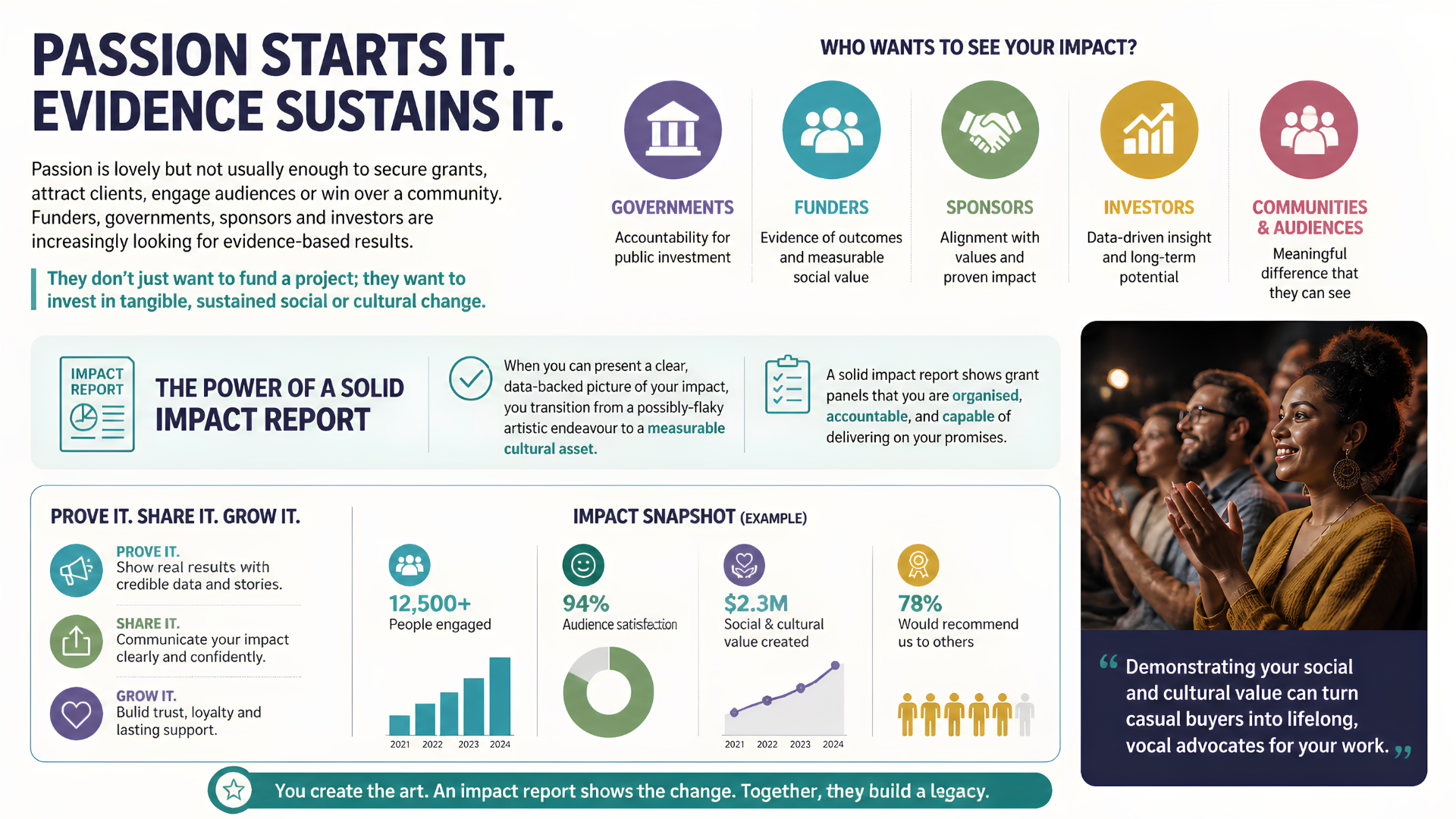
Passion is lovely but not usually enough to secure grants, attract clients, engage audiences or win over a community. Funders, governments, sponsors and investors are increasingly looking for evidence-based results. They don’t just want to fund a project; they want to invest in tangible, sustained social or cultural change.
When you can present a clear, data-backed picture of your impact, you transition from a possibly-flaky artistic endeavour to a measurable cultural asset. A solid impact report shows grant panels that you are organised, accountable, and capable of delivering on your promises. In addition, customers are increasingly conscientious about where they spend their money. Demonstrating your social and cultural value can turn casual buyers into lifelong, vocal advocates for your work.
How to DIY Your Impact Measurement
You don’t need to hire an expensive consulting firm to start tracking your impact. Here are the best ways to build a DIY framework that works for a small creative enterprise:
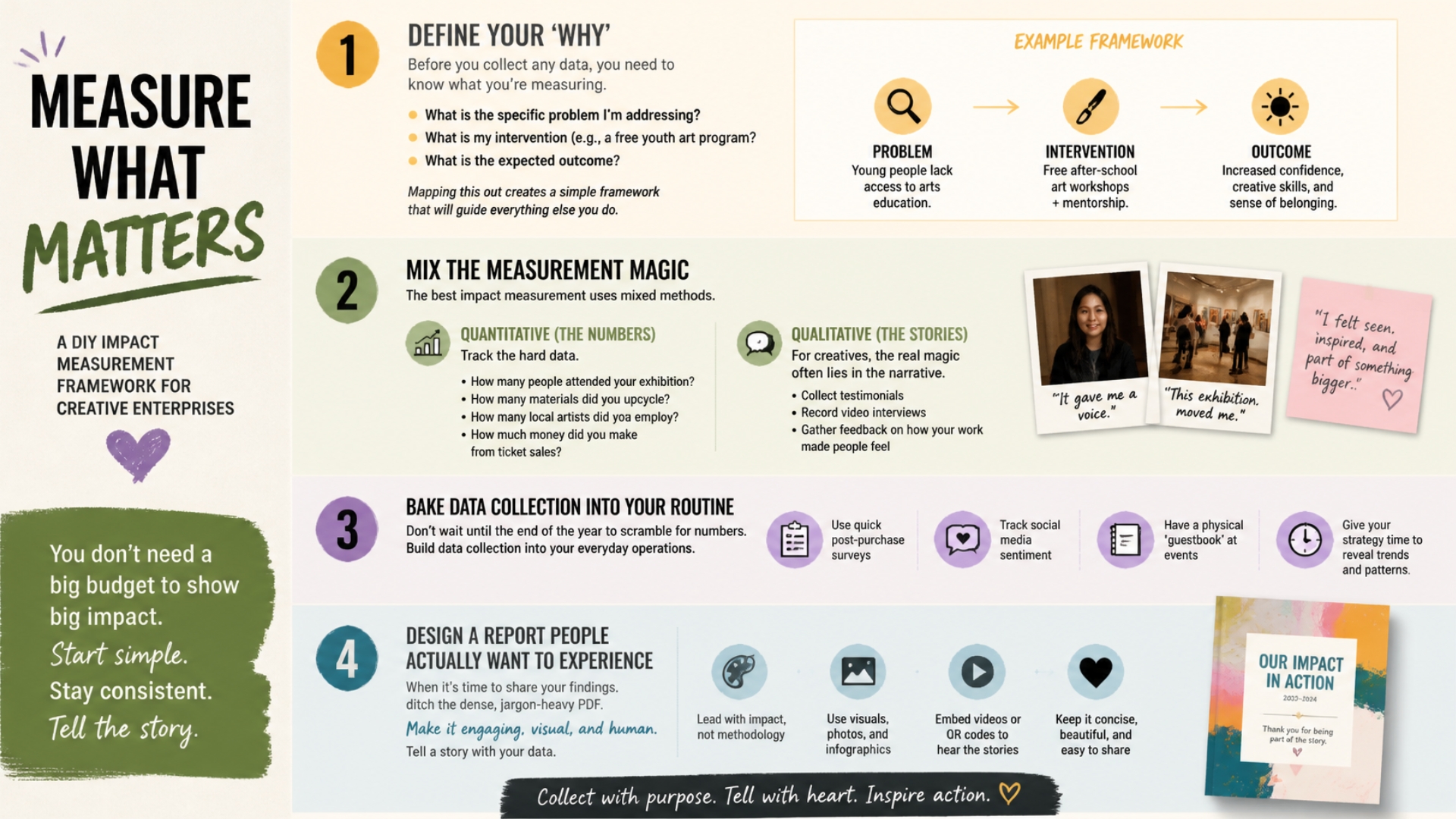
- Define Your ‘Why’: Before you collect any data, you need to know what you’re measuring. Start by asking: What is the specific problem I’m addressing? What is my intervention (e.g., a free youth art program)? What is the expected outcome?. Mapping this out creates a simple framework that will guide everything else you do.
- Mix the Measurement Magic: The best impact measurement uses mixed methods.
- Quantitative (The Numbers): Track the hard data. How many people attended your exhibition? How many materials did you upcycle? How many local artists did you employ? How much money did you make from ticket sales?
- Qualitative (The Stories): For creatives, the real magic often lies in the narrative. Collect testimonials, record video interviews, and gather feedback on how your work made people feel.
- Bake Data Collection into Your Routine: Don’t wait until the end of the year to scramble for numbers. Build data collection into your everyday operations. Use quick post-purchase surveys, track social media sentiment, or have a physical ‘guestbook’ at events where people can leave comments. Give your strategy time to reveal trends and patterns.
- Design a Report People Actually Want to Experience: When it’s time to share your findings, ditch the dense, jargon-heavy PDF. Use your creative skills (or those of a colleague) to combine your data with compelling storytelling, photos and striking visuals. Create eye-catching infographics, or build an interactive webpage. Make a video version with interviews and animations. Put the voices and faces of your community at the centre of the report to ground your statistics in real human experiences.
Measuring your impact doesn’t have to be overwhelming. By starting small, asking the right questions, and leaning into your natural storytelling abilities, you can vividly demonstrate the true value of your creative business – and unlock the funding you need to keep growing.
Would you like to see some examples? Visit the Creative Plus Business Impact Report page below.




0 Comments